- Home
- Blog
- Digital dentistry
- Digital Dentures
Digital dentures explained: workflow, 3D printing, and clinical outcomes
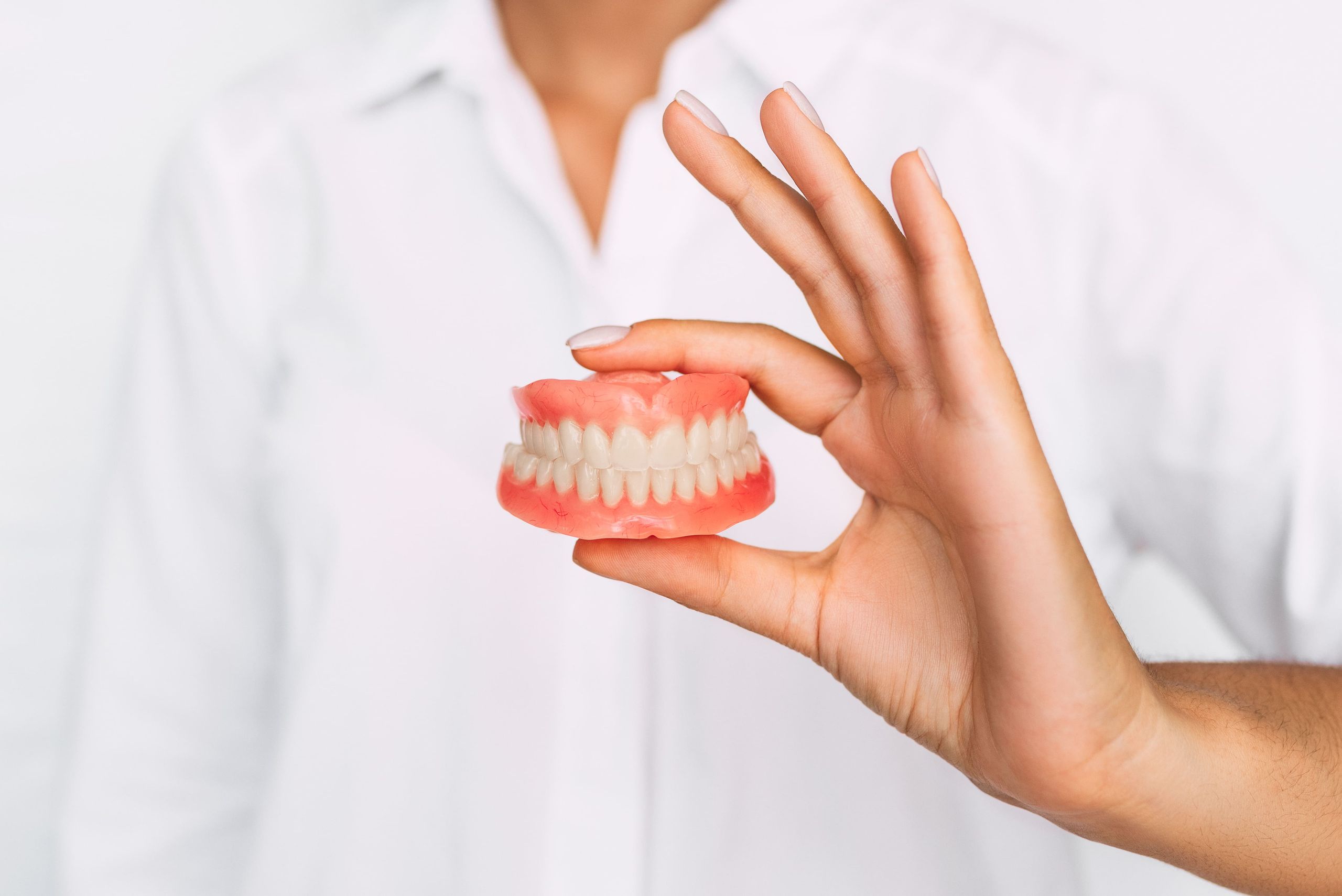
Digital dentures are removable dental prostheses created using a digital workflow that combines scanning, design software, and computer-aided manufacturing. They are produced from digital records of a patient’s oral structures instead of fully manual fabrication methods. Digital dentures are used in edentulous and partial cases to restore function, esthetics, and phonetics within a digital dentistry workflow.
Digital denture workflows have developed alongside broader advances in digital dentistry. Instead of relying entirely on manual processes, clinicians and laboratories can now use digital records, software-based design, and automated manufacturing methods to produce dentures.
This shift affects how dentures are designed, fabricated, and delivered in clinical practice. It also changes how clinical data is handled, enabling more structured workflows and clearer coordination between clinics and laboratories.
What are digital dentures?
Digital dentures are removable prosthetic devices created using a combination of digital scanning, design software, and computer-aided manufacturing methods. They can be used for both complete and partial denture cases, depending on the clinical situation.
The process can begin in different ways. A digital impression for dentures may be captured directly from the patient using an intraoral scanner, or a conventional impression or existing denture can be digitized using a dental laboratory scanner to create a digital model. In some cases, this involves capturing digital scans for denture fabrication. The choice of method depends on factors such as whether the patient is fully edentulous, the type of denture being produced, and the available clinical data.
Once the data is available, the denture is designed using dedicated software. The design includes tooth setup, base structure, and adjustments for function, esthetics, and phonetics. The final design is then prepared for manufacturing using CAD/CAM systems.
Digital dentures have the following characteristics:
- Created from digital records rather than fully manual fabrication
- Applicable to both complete and partial denture cases
- Designed using CAD software for controlled and repeatable results
- Manufactured using milling, 3D printing, or a combination of both
- Digitally stored for future reference, modification, or duplication
Digital denture workflow: from scan to delivery
Digital dentures are created through a structured workflow that combines data capture, digital design, and manufacturing. The process may vary depending on the clinical case, but the overall sequence remains consistent.
This section focuses on the prosthetic workflow rather than on scanning or imaging principles.
Step 1: Data acquisition
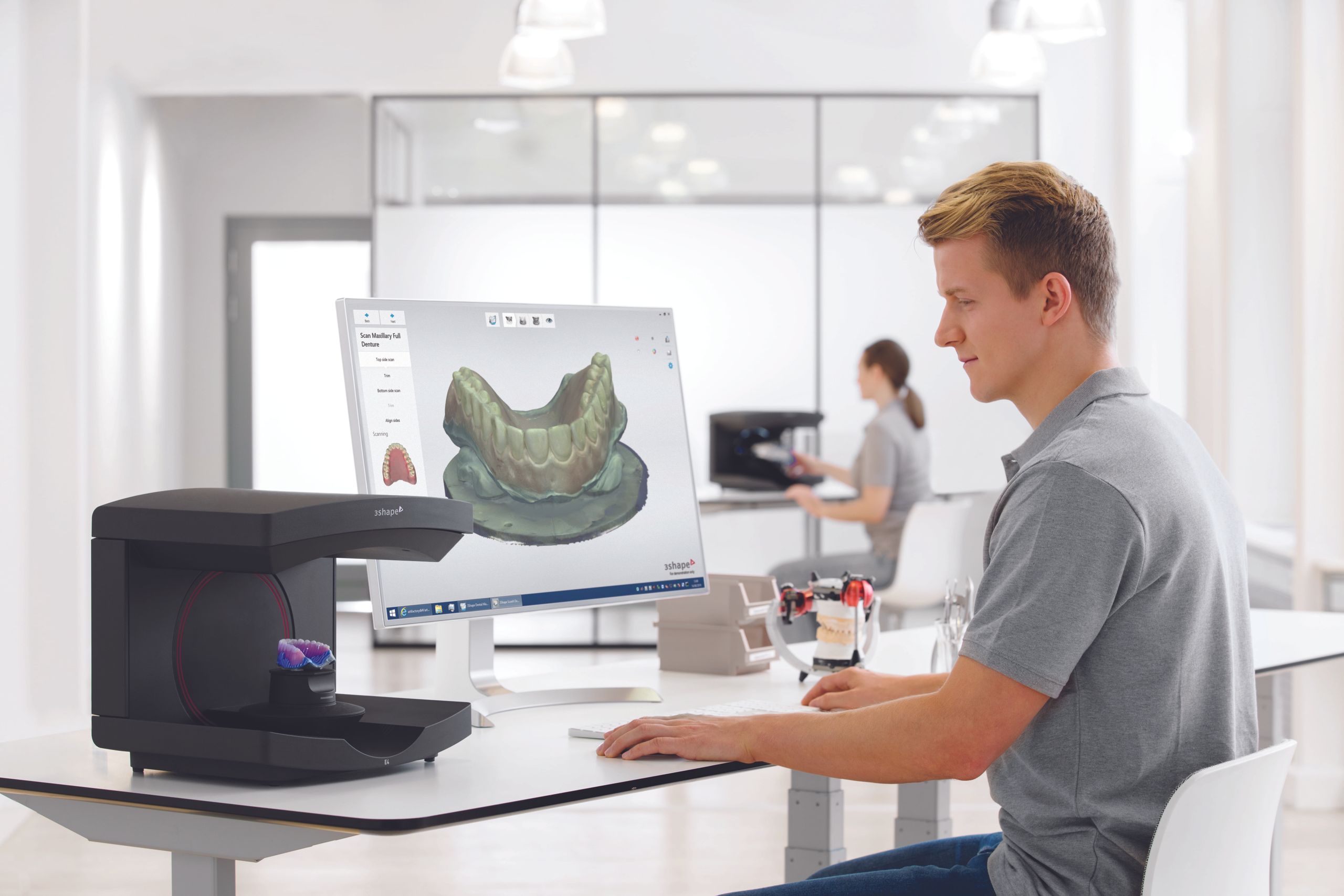
The workflow begins with capturing a digital representation of the patient’s oral structures. This can be done using an intraoral scanner to obtain a direct digital impression or by digitizing a conventional impression or existing denture.
A combination of different imaging and impression taking methods is also possible 1. The approach depends on the clinical situation, such as whether the patient is fully edentulous, whether a duplicate denture is being created, or whether a combination of methods is required.
Step 2: Digital design (CAD)
Once the data is available, the denture is designed using dental CAD software. This stage includes tooth setup, base design, and adjustments to support function, esthetics, and phonetics.
The software allows technicians to modify the design efficiently and reduces the need for manual re-setting of teeth and other time-consuming adjustments.
Step 3: Manufacturing (milling and 3D printing)
After the design is finalized, the denture is manufactured using computer-aided methods. This can involve milling, 3D printing, or a combination of both.
In 3D printing workflows, the denture base and teeth may be produced separately and then assembled. Milling typically uses pre-manufactured materials that are shaped to match the digital design.
With a digital file as a starting point, 3D printing is an option, especially when cost is a factor 2.
Step 4: Try-in and final delivery
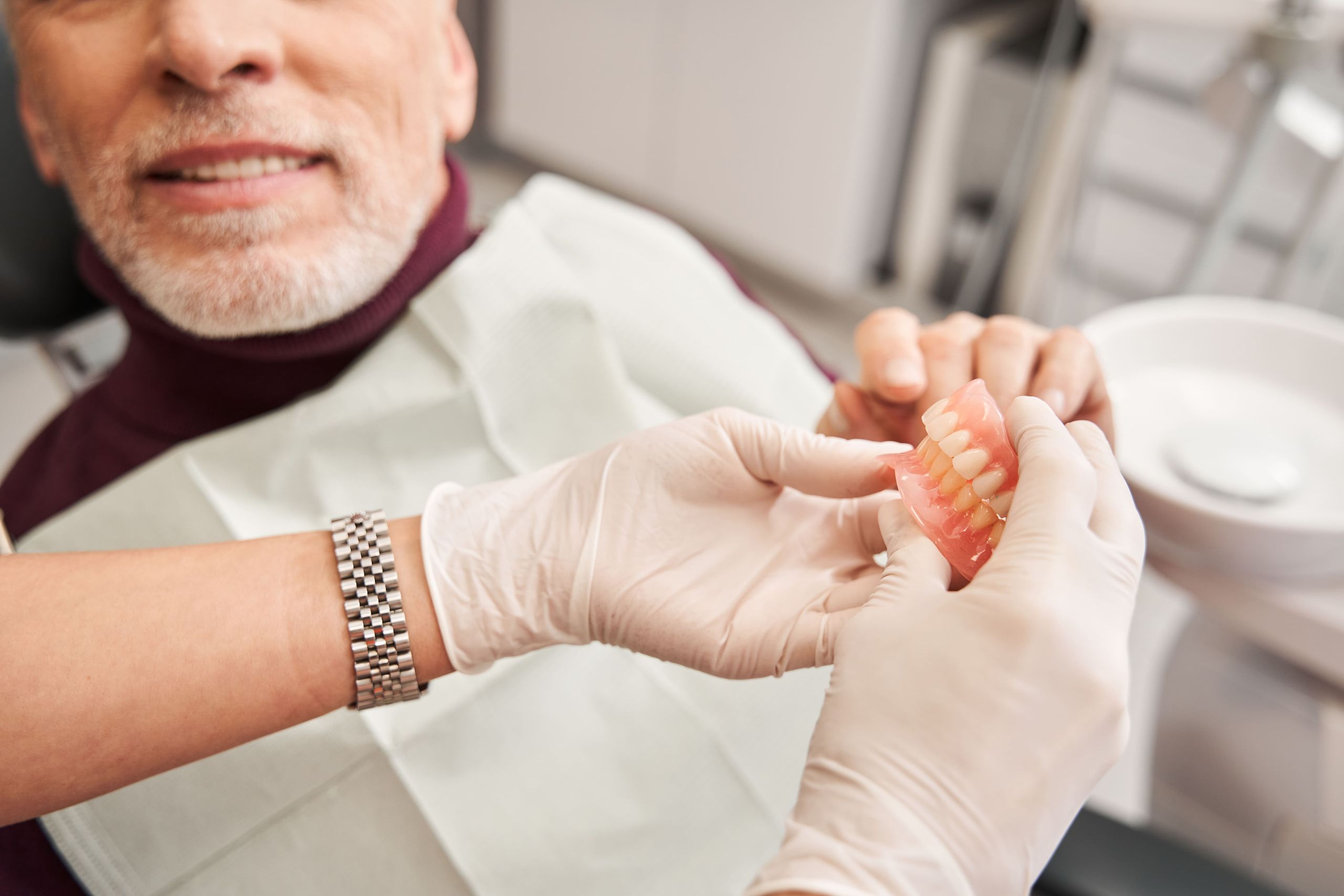
A try-in denture may be produced to evaluate fit, function, and esthetics before the final prosthesis is manufactured. This allows the clinician to make adjustments and confirm the outcome with the patient.
Once approved, the final denture is produced, finished, and delivered. The digital files can be stored and reused for future reference or duplication if needed.
Workflow summary
Digital dentures are created by capturing oral data, designing the prosthesis in software, manufacturing it using milling or 3D printing, and delivering the final or validated prosthesis. This structured workflow supports consistent results and allows digital records to be reused when needed.
Manufacturing methods: milling vs 3D printing
Digital dentures can be manufactured using either subtractive or additive methods, depending on the clinical requirements and available technology. Both approaches start from the same digital design but differ in how the final prosthesis is produced. Differences in production methods, efficiency, and cost have been analyzed in a Comparative cost-analysis for removable complete dentures 2.
The main differences between milling and 3D printing in digital denture fabrication are summarized below.
| Aspect | Milling (subtractive manufacturing) | 3D printing (additive manufacturing) |
|---|---|---|
| Process | Material is removed from a solid block to form the denture | Material is built layer by layer to create the denture |
| Materials | Pre-manufactured materials that are well known and studied | Light-curing resins used in layer-based production |
| Production approach | Typically uses established workflows with predictable material behavior | Often involves separate production of denture base and teeth, followed by assembly |
| Workflow characteristics | More established and widely used in clinical practice | Increasingly used for efficiency and flexibility in production |
| Output consistency | High consistency due to controlled material properties | Dependent on printing and post-processing steps |
Subtractive manufacturing (milling)
In milling workflows, the denture is produced by removing material from a solid block based on the digital design. This approach uses materials that are well known and widely studied, which contributes to predictable and consistent results.
Milling is often preferred in cases where material properties and long-term durability are key considerations.
Additive manufacturing (3D printing)
In 3D printing workflows, the denture is created layer by layer using light-curing resins. In many cases, the denture base and teeth are produced separately and then assembled before final processing.
This approach supports production workflows that can be adapted based on design requirements and manufacturing setup, particularly where speed and cost considerations are relevant.
Material considerations
Material selection differs between milling and 3D printing workflows. Milling typically uses pre-manufactured materials with established performance characteristics, while 3D printing relies on resins that require curing and post-processing.
These differences influence how dentures are produced, finished, and evaluated in clinical practice, and are considered when selecting the appropriate manufacturing method.
How digital dentures differ from conventional dentures
Digital and conventional dentures differ in how they are designed, fabricated, and managed throughout the workflow. While both aim to restore function, esthetics, and phonetics, they rely on different processes and data handling methods.
The key differences between digital and conventional dentures are summarized below.
| Aspect | Digital dentures | Conventional dentures |
|---|---|---|
| Data capture | Digital scans or digitized models | Physical impressions using materials |
| Design process | Software-based design (CAD) with adjustable parameters | Manual wax setup and physical adjustments |
| Manufacturing | Milling, 3D printing, or hybrid methods | Manual fabrication and processing |
| Workflow flexibility | Changes can be made digitally without restarting the process | Adjustments often require repeating manual steps |
| Reproducibility | Digital files can be stored, reused, and duplicated | Reproduction typically requires starting from scratch |
| Appointment requirements | Can reduce number of visits depending on workflow | Often requires multiple appointments and adjustments |
| Data storage | Digital archiving for future use | Physical models must be stored or remade |
Digital workflows reduce the need for repeated manual steps and allow modifications to be made more efficiently during the design phase. They also enable digital storage and reuse of denture designs, which supports faster remakes and improved continuity of care.
In terms of fit and adaptation, studies report that digital complete dentures showed similar or better adaptation than conventional dentures 3.
Conventional workflows rely on manual techniques and physical materials, which can make adjustments and duplication more time-consuming. However, both approaches remain clinically valid and are used depending on the specific case and clinical preference.
Clinical studies have shown that digital workflows for dentures can reduce chair time and number of visits for patients 4.
Limitations of digital denture workflows
Digital denture workflows offer structured and efficient processes, but they also have limitations that depend on clinical conditions and technical factors. These limitations should be considered when selecting the appropriate approach for each case.
Clinical limitations
Certain clinical situations can make digital denture workflows more complex. Fully edentulous cases, for example, can be challenging due to the presence of movable soft tissue and the lack of stable reference points during data capture.
In some cases, conventional impressions or a combination of digital and conventional methods may still be required to obtain accurate data. A combination of different imaging and impression taking methods is also possible 1.
The choice of approach depends on the clinical condition and the type of denture being produced.
Technical and equipment limitations
Digital denture workflows require specialized equipment, software, and trained personnel. Implementing these systems involves an initial investment and a learning curve for clinicians and technicians.
In addition, not all clinics and laboratories have fully adopted digital technologies, which can affect how workflows are organized and how cases are managed between different providers.
Clinical outcomes of digital dentures
Digital denture workflows influence clinical outcomes by changing how dentures are designed, fabricated, and adjusted within treatment planning in dentistry. These outcomes are linked to the use of digital data, software-based design, and controlled manufacturing processes.
Predictability of fit
Digital dentures are designed from structured data and manufactured using controlled methods. When the input data and workflow are well managed, this supports consistent adaptation of the final prosthesis.
Clinical studies report that digital complete dentures showed similar or better adaptation than conventional dentures 3.
Reproducibility
Digital denture designs can be stored and reused, making it possible to duplicate or modify an existing prosthesis without repeating the entire process. This supports continuity of care and simplifies remakes.
Adjustment and refinement
Design changes that would traditionally require manual reworking can be handled within the software. This can reduce the number of corrections needed during delivery.
Workflow efficiency
Digital denture processes can reduce the number of clinical appointments and simplify communication between clinics and laboratories. Studies also show that digital workflows can reduce chair time and number of visits for patients 4.
In addition to workflow and efficiency considerations, material properties also play a role in clinical outcomes. Digital prostheses can be up to 8 times stronger than conventional ones 5.
Common questions about digital dentures (FAQ)
What are digital dentures?
Digital dentures are removable dental prostheses created using digital workflows that include scanning, software-based design, and computer-aided manufacturing. They are produced from digital records rather than fully manual fabrication methods.
How are digital dentures made?
Digital dentures are created through a structured process that includes data acquisition, digital design, manufacturing using milling or 3D printing, and final delivery. The workflow may vary depending on the clinical case.
Can digital dentures be 3D printed?
Yes, digital dentures can be produced using 3D printing. In these workflows, the denture is built layer by layer using light-curing resins, often with separate production of the denture base and teeth before assembly.
What is the difference between milled and 3D printed dentures?
Milled dentures are created by removing material from a solid block, while 3D printed dentures are built layer by layer. The choice between these methods depends on factors such as workflow, materials, and clinical preferences.
Do digital dentures require fewer appointments?
Digital denture workflows can reduce the number of clinical appointments in some cases by streamlining design and manufacturing processes.
Clinical studies show that digital workflows can reduce chair time and number of visits 4. The exact number of visits depends on the treatment plan and clinical requirements.
Are digital dentures more accurate than conventional dentures?
Digital dentures can provide consistent and predictable results when based on accurate data and controlled workflows.
Studies report that digital complete dentures showed similar or better adaptation than conventional dentures 3. Outcomes depend on the clinical situation and the methods used.
Are digital dentures suitable for all patients?
Digital dentures can be used in many clinical scenarios, including complete and partial cases. However, certain situations, such as complex edentulous cases, may require a combination of digital and conventional approaches, including the use of imaging and impression taking methods 1.
Summary: What digital dentures are and how they are made
Digital dentures are removable prosthetic devices created using digital workflows that combine data acquisition, software-based design, and computer-aided manufacturing. They are based on digital records rather than fully manual fabrication methods.
The process typically follows a structured sequence: capturing clinical data, designing the denture in software, manufacturing it using milling or 3D printing, and delivering the final prosthesis. This workflow supports controlled design and production while enabling more efficient adjustments.
Digital dentures differ from conventional approaches in how data is handled and how designs are created, stored, and reused. Digital records can be archived and used for duplication or modification without repeating the entire workflow.
Overall, digital denture workflows support consistent results, improved coordination between clinics and laboratories, and more efficient management of denture fabrication and delivery.
Resources
- Hassan B, Greven M, Wismeijer D. Integrating 3D facial scanning in a digital workflow to CAD/CAM design and fabricate complete dentures for immediate total mouth rehabilitation. J Adv Prosthodont. 2017 Oct;9(5):381-386. doi: 10.4047/jap.2017.9.5.381. Epub 2017 Oct 16. PMID: 29142646; PMCID: PMC5673615.
- Lucio Lo Russo, DDS, PhD, Khrystyna Zhurakivska, DDS, PhD, Laura Guida, DDS, Konstantinos Chochlidakis, DDS, MS, Giuseppe Troiano, DDS, PhD, Carlo Ercoli, DDS, MBA. Comparative cost-analysis for removable complete dentures fabricated with conventional, partial, and complete digital workflows. May 31, 2022.
- Wang C, Shi YF, Xie PJ, Wu JH. Accuracy of digital complete dentures: A systematic review of in vitro studies. J Prosthet Dent. 2021 Feb;125(2):249-256. doi: 10.1016/j.prosdent.2020.01.004. Epub 2020 Feb 27. PMID: 32115218.
- Janeva NM, Kovacevska G, Elencevski S, Panchevska S, Mijoska A, Lazarevska B. Advantages of CAD/CAM versus Conventional Complete Dentures — A Review. Open Access Maced J Med Sci. 2018 Aug 4;6(8):1498-1502. doi: 10.3889/oamjms.2018.308. PMID: 30159084; PMCID: PMC6108805.
- Jason Mazda. Digital Dentures Are Here. Proponents say digitizing a traditionally challenging process is no longer a novelty. Inside Dental Technology. 2018 February.